Confused About Surgery? Talk to Our Specialists Now »
LASIK Eye Surgery in Gurgaon – Cost, Procedure, Recovery & Eligibility
Personalised LASIK eye surgery in Gurgaon for myopia, hyperopia and astigmatism using advanced blade-free vision correction technology.
- Advanced Blade-Free LASIK
- 10,000+ Happy Clients
- Experienced LASIK Surgeons
- Cashless Insurance Support
Book Free Appointment
Takes 30 Seconds • No Obligation


What Is LASIK Eye Surgery?
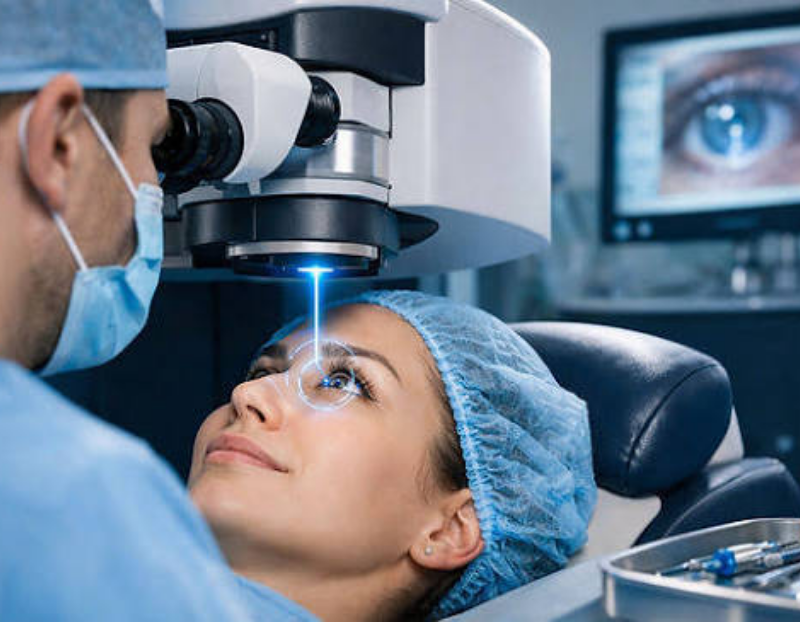
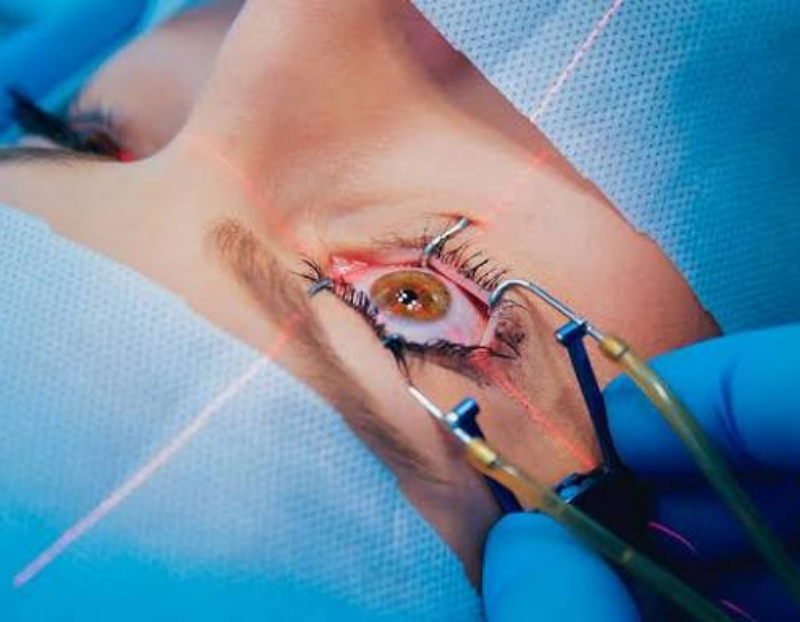
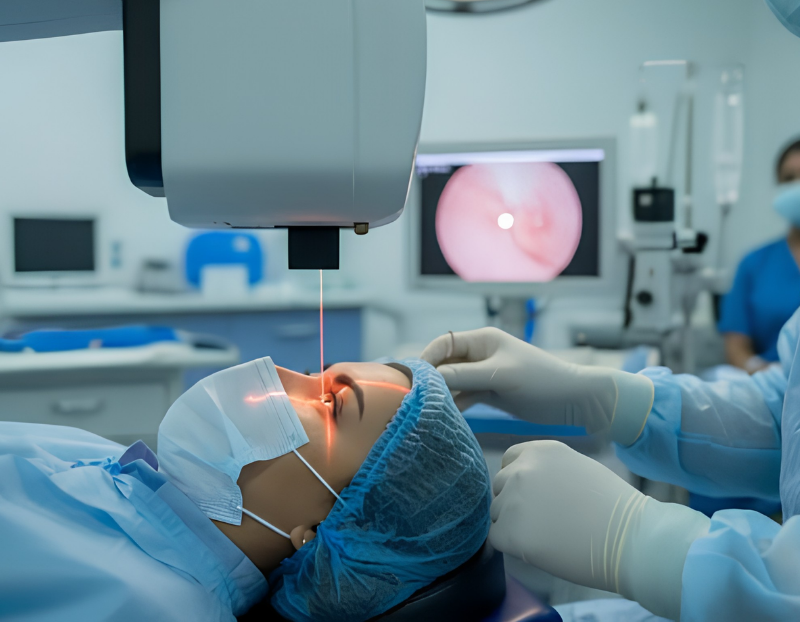
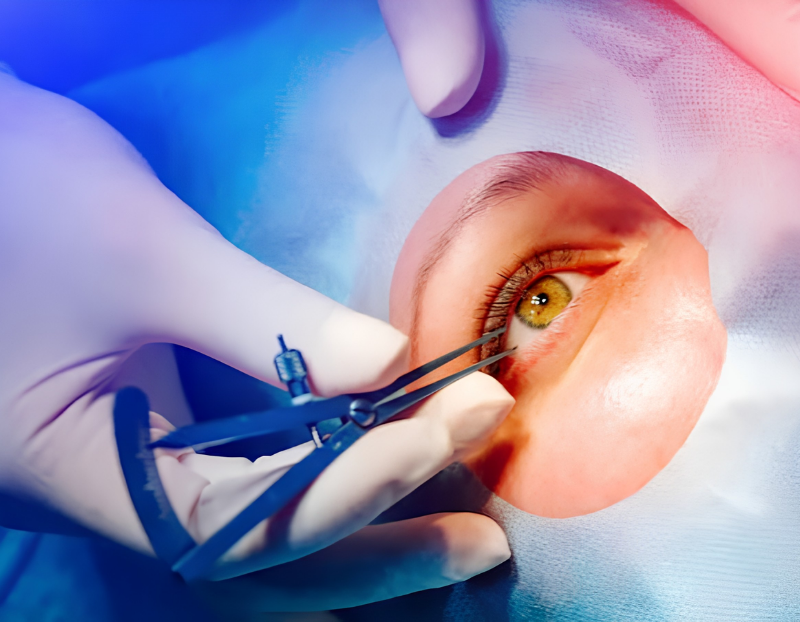
LASIK (Laser-Assisted In Situ Keratomileusis) is a laser vision correction procedure used to treat common refractive errors such as myopia, hyperopia, and astigmatism.
During the procedure, an ophthalmologist reshapes the cornea using advanced laser technology so that light can focus more accurately on the retina, helping improve vision.
LASIK is generally a quick procedure with minimal downtime, but suitability depends on factors such as eye power, corneal thickness, eye health, and prescription stability. A detailed eye examination is required before treatment.
Conditions We Treat


How Is LASIK Eye Surgery Performed?

Eye Examination & Corneal Mapping
Eye health is checked and the cornea is mapped.

Preparing the Eye
Numbing eye drops are applied for comfort.

Creating the Corneal Flap
A thin corneal flap is carefully created.

Laser Reshaping & Flap Repositioning
The cornea is reshaped and the flap is repositioned.

Post-Operative Examination
Vision is checked and aftercare instructions are provided.
Will LASIK Remove My Specs?
LASIK has strong potential to free you from glasses or contacts, but eligibility depends on a few clear factors.

| You must be | You Should not be |
|---|---|
| You are at least 18 years old and have generally healthy eyes. | Pregnant or Breastfeeding Hormonal changes during pregnancy or breastfeeding can temporarily affect vision and eye power. |
| Your spectacle or contact lens prescription has remained stable for at least 1 year. | Some autoimmune diseases, uncontrolled diabetes, or other systemic health conditions may affect healing and LASIK suitability. |
| Your corneal thickness and overall eye health are suitable for LASIK, as confirmed during your eye examination. | Conditions such as severe dry eyes, thin or irregular corneas, keratoconus, retinal problems, glaucoma, or other eye diseases may make LASIK unsuitable. |
Types of Laser Vision Correction


LASIK Surgery Cost in Gurgaon
The cost of LASIK surgery in Gurgaon depends on the laser technology, eye condition, diagnostic tests, surgeon’s expertise, and hospital facilities.
Treatments such as Blade-Free LASIK, Contoura Vision, SMILE, and PRK may have different costs depending on your eye condition and recommended procedure.
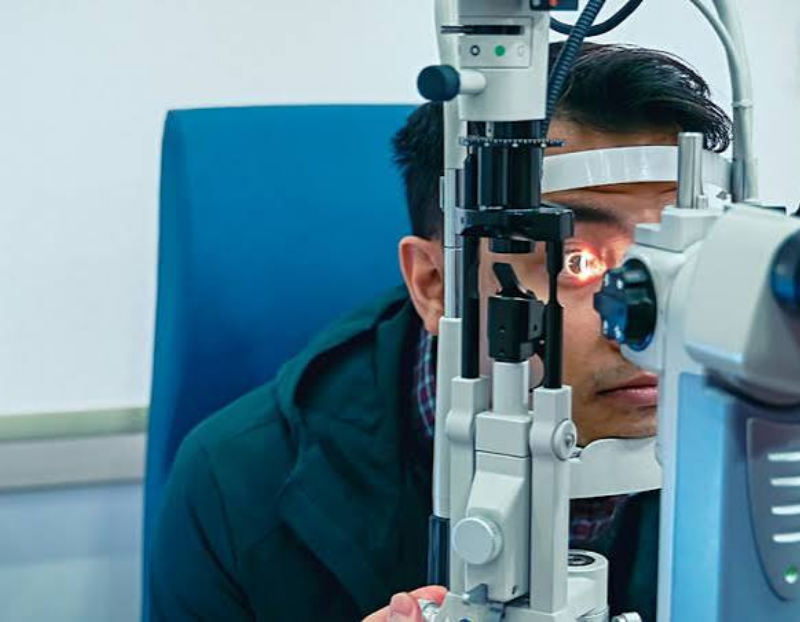
Before treatment, an ophthalmologist checks your eye power, corneal thickness, and overall eye health to determine suitability.
At SarthiCare, we connect you with experienced ophthalmologists and trusted eye hospitals in Gurgaon for the right treatment option and a personalized cost estimate.
Book an eye evaluation to know your LASIK surgery cost.
LASIK Recovery Timeline


LASIK Treatment Options
Explore advanced LASIK procedures designed to correct vision and reduce dependence on glasses or contact lenses.
BLADE-FREE LASIK
- No Hospitalisation
- Minimally Invasive
- Quick Visual Recovery
- Minimal Discomfort
- Femtosecond + Excimer Laser
- Suitable for Common Refractive Errors
- Precise Vision Correction
- No External Lens After Recovery
- Return to Routine Activities Quickly
- Suitability Confirmed After Detailed Eye Evaluation
SURFACE LASER / PRK
- No Hospitalisation
- No Corneal Flap
- Gradual Visual Recovery
- Mild Discomfort During Recovery
- Excimer Laser Treatment
- Suitable for Selected Thin Corneas
- Preserves More Corneal Tissue
- Temporary Protective Contact Lens May Be Used
- Longer Healing Period Compared
- Suitability Confirmed After Detailed Eye Evaluation
ICL (EVO ICL)
- No Hospitalisation
- Implantable Lens Procedure
- Quick Visual Recovery
- Minimal Discomfort
- Collamer Lens Implanted Inside the Eye
- High Myopia & Selected Thin Corneas
- Corneal Tissue is Not Removed
- Lens Remains Inside the Eye
- Fast Recovery for Many Patients*
- Suitability Confirmed After Detailed Eye Evaluation
CONTOURA VISION LASIK
- No Hospitalisation
- Topography-Guided Laser Treatment
- Quick Visual Recovery
- Minimal Discomfort
- Excimer Laser with Corneal Mapping
- Customized Treatment Based on Corneal Topography
- Helps Correct Corneal Irregularities
- Designed to Improve Visual Quality
- Fast Return to Routine Activities
- Suitability Confirmed After Detailed Eye Evaluation
SMILE
- No Hospitalisation
- Flapless Laser Procedure
- Quick Visual Recovery
- Minimal Discomfort
- Femtosecond Laser
- Commonly Used for Myopia & Astigmatism
- Small-Incision Procedure
- Minimal Corneal Surface Disturbance
- Fast Return to Routine Activities*
- Suitability Confirmed After Detailed Eye Evaluation
Benefits of LASIK:
- Reduced dependence on glasses or contact lenses
- Clearer vision for suitable candidates
- Quick procedure with minimal downtime
- Most patients can return to routine activities relatively soon
- Long-term vision correction may be possible
Risks & Side Effects:
- Dry eyes
- Glare or halos around lights
- Temporary blurred vision
- Night vision changes
- Under-correction or over-correction
- Rare procedure-related complications
Meet Our Eye Specialists

Dr. Hemant Kamble
MBBS, MD - Ophthalmology
Ophthalmologist / Eye Surgeon
19 Years
Experience
AIIMS Trained
MD - Ophthalmology

Dr. Saumil Sheth
MBBS, MS - Ophthalmology, DNB, FCPS, DOMS
Ophthalmologist / Eye Surgeon
26 Years
Experience
Advanced Qualified
MS, DNB, FCPS, DOMS

Dr. Jatin Ashar
MBBS, MD - Ophthalmology, DNB, FAICO
Ophthalmologist / Eye Surgeon
19 Years
Experience
Cornea Specialist
L V Prasad Fellow

Dr. (Lt. Col) Shantanu Mukherji
MBBS, MS - Ophthalmology
Cataract, Glaucoma & LASIK Specialist
17+ Years
Eye Care Experience
AFMC Trained
Advanced Glaucoma Care

Dr. Kamal B Kapur
MBBS, MS - Ophthalmology
Cataract, LASIK & Refractive Surgeon
Medical Director
Sharp Sight Eye Hospitals
APEX Expert
Asia Pacific Expert

Dr. Anurag Wahi
LASIK & Eye Surgeon
Ophthalmologist / Eye Surgeon
Senior Consultant
Ophthalmology
LASIK Specialist
Advanced Phaco Training

Dr. Samir Sud
MBBS, DNB
Cataract, LASIK & Refractive Surgeon
Co-Founder & Director
Sharp Sight Eye Hospitals
Bausch + Lomb Certified
LASIK Trainer
Why Choose SarthiCare?

Experienced Ophthalmologists (MBBS, MS/DNB)

Cashless Insurance Support

10+ Years of Experience

10,000+ Successful Surgery
What Our Patients Say
Our Reviews
I used to struggle with glare and blurry vision after sunset. After Contoura Vision LASIK, my night vision improved drastically. The recovery was smooth and I resumed work in two days.
Frequently Asked Questions
LASIK is a laser vision correction procedure that reshapes the cornea to help correct refractive errors such as myopia, hyperopia, and astigmatism.
The full procedure for both eyes takes around 10 to 15 minutes, with actual laser correction lasting only seconds per eye.
The cost of LASIK surgery depends on factors such as the laser technology used, diagnostic tests, surgeon, hospital, and the patient’s eye condition. The exact cost should be confirmed after a detailed eye examination
No. LASIK is a day-care procedure — most patients go home within a couple of hours of the surgery.
LASIK eligibility depends on factors such as stable eye power, corneal thickness, corneal health, dry-eye status, and overall eye health. Final suitability can only be determined after an examination by an ophthalmologist.
No, arrange for someone else to drive you, since your vision may be temporarily blurry right after the procedure.
Your surgeon may suggest alternatives like PRK or ICL depending on your corneal thickness and prescription.
Many patients resume desk-based work within 1-2 days, though this depends on your surgeon's advice and job type.
Sarthi Care connects you with experienced LASIK surgeons at NABH-accredited partner hospitals in Gurgoan and coordinates your entire treatment journey — consultations, scheduling, and insurance support.
Coverage depends on your specific policy. Sarthi Care's team can help check eligibility and assist with cashless claims where applicable.
No. Numbing eye drops are used throughout, so the procedure itself is virtually painless. Some patients feel mild pressure for a few seconds.
Most surgeons recommend LASIK only for adults above 18 with a stable eye power for at least a year. There's no strict upper age limit, but eligibility is confirmed through screening.
Most patients don't need glasses for the refractive error LASIK corrected. Some may need reading glasses later in life due to natural aging (presbyopia).
Avoid wearing contact lenses for about a week before your screening and procedure, and skip makeup, perfume, or lotions on the day of surgery.
LASIK and Contoura Vision reshape the cornea using a laser, with Contoura offering more personalised, topography-guided correction. SMILE is a smaller-incision, flapless alternative. ICL involves implanting a lens inside the eye rather than reshaping the cornea, and is generally used for very high prescriptions or unsuitable corneas.
It depends on how well-controlled the diabetes is and whether there are any related eye complications. This is assessed individually during screening.
In some cases, a touch-up or enhancement procedure is possible if there's enough residual corneal tissue, but this is decided by your surgeon after evaluation.
Mild, temporary dryness is common after LASIK and usually improves within a few weeks with lubricating eye drops as advised by your surgeon.
Follow-ups are typically scheduled the day after surgery, then at one week, and then monthly for the first couple of months, though your surgeon may adjust this based on your healing.
In most cases, yes, though it's best to check with your surgeon first since your eyes will have changed after the procedure.
The correction to your cornea is permanent. However, natural age-related changes to the eye, like presbyopia, can still occur later in life and may require reading glasses.
The screening includes tests like corneal topography, pachymetry (corneal thickness measurement), refraction, and a dry eye assessment, along with a detailed consultation with your surgeon to confirm your suitability.